What Is End-to-End Supply Chain Visibility?
A late shipment rarely starts with the truck itself. It usually starts much earlier — with a missing supplier update, an inventory mismatch, a handoff that never got confirmed, or a planning decision made using outdated information.
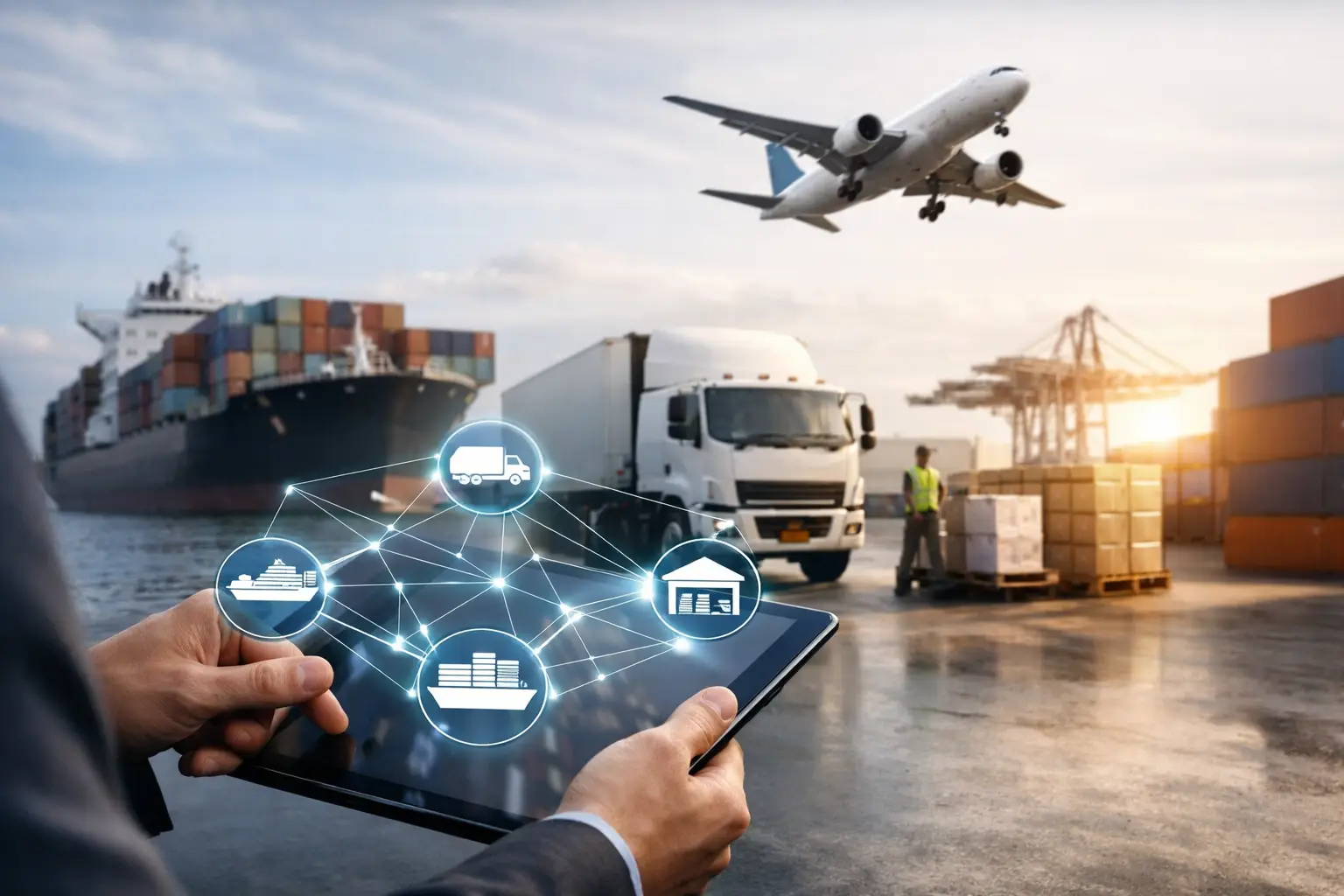
That is why the question “what is end-to-end supply chain visibility?” matters to operations leaders. It is not simply about seeing a shipment moving on a map. It is about understanding what is happening across procurement, inventory, transportation, suppliers, warehouses, and final delivery through one connected operational view.
For companies managing growth, tighter service expectations, and rising operational costs, visibility is no longer a luxury. If teams still rely on emails, spreadsheets, carrier portals, and disconnected systems to piece together the truth, delays become harder to prevent and significantly more expensive to resolve.
What is end-to-end supply chain visibility?
End-to-end supply chain visibility is the ability to monitor, track, and understand the movement of goods, information, and operational exceptions across the complete supply chain lifecycle — from sourcing and procurement through production, storage, transportation, and final delivery.
The key phrase is end-to-end.
Basic visibility might tell you where a shipment is after it has already left the warehouse. End-to-end supply chain visibility goes much further. It connects supplier activity, inbound shipments, inventory levels, order status, outbound transportation, and delivery milestones so teams can make decisions based on a complete operational picture.
That broader perspective changes how companies respond to problems. Instead of discovering issues after a customer complaint or inventory shortage occurs, teams can identify operational risks earlier and take corrective action while there is still time to reduce the impact.
What end-to-end supply chain visibility actually looks like
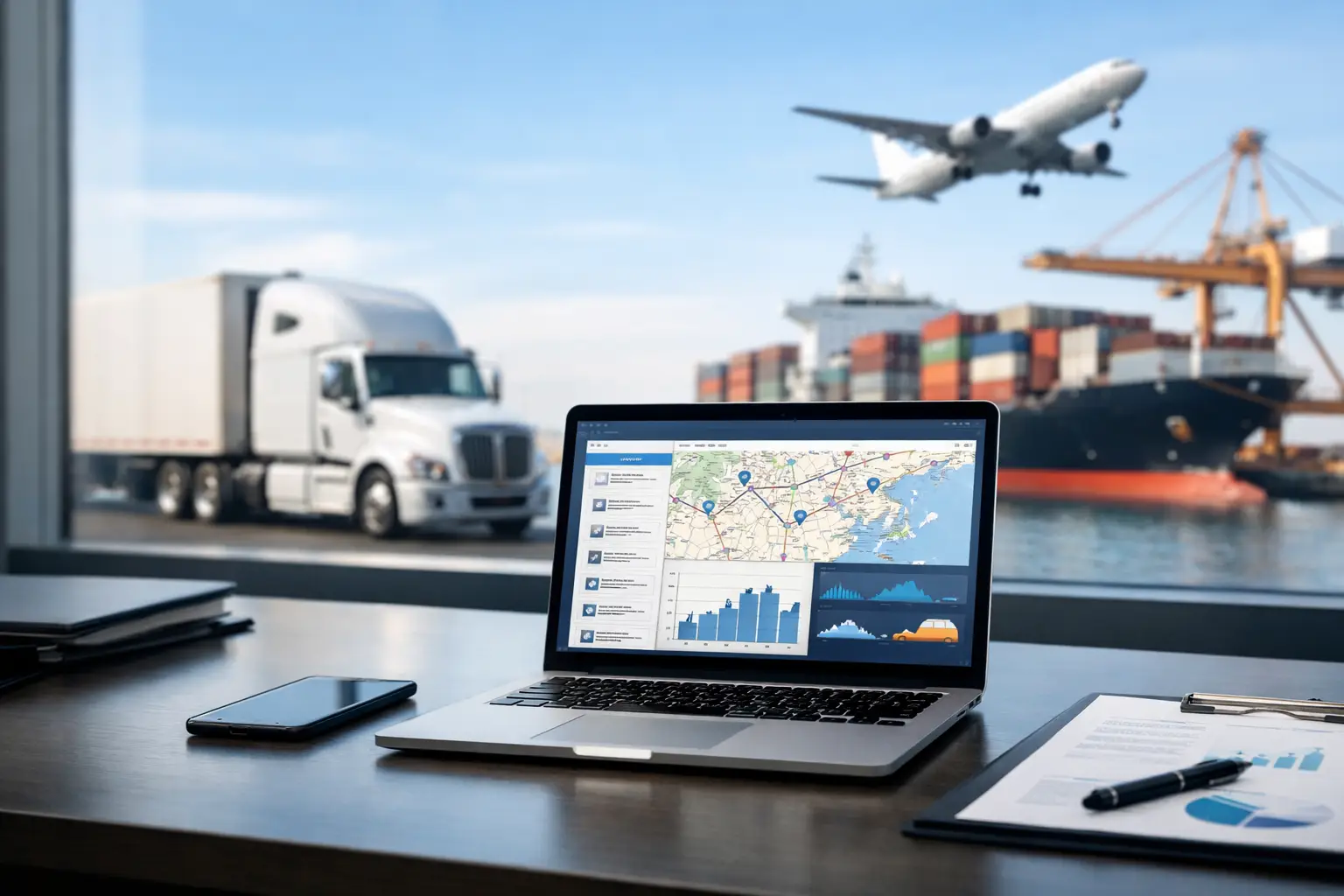
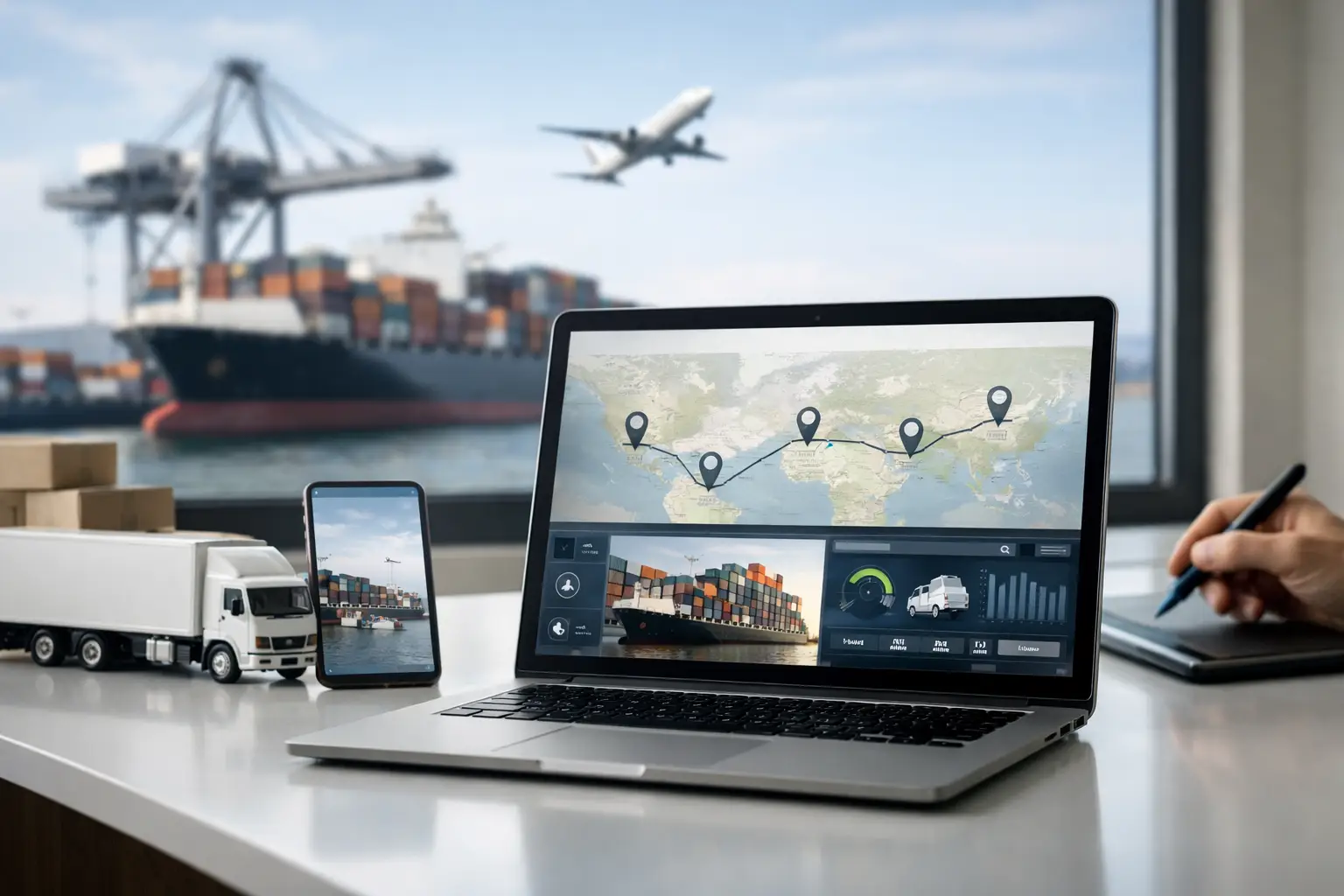
In practice, supply chain visibility is not one dashboard filled with moving dots on a map. It is a connected operational system that pulls information from multiple sources and transforms it into actionable intelligence that teams can trust and use.
That typically includes:
- Purchase order status
- Supplier confirmations
- Inventory positions
- Warehouse activity
- Transportation milestones
- Estimated arrival times
- Exception alerts
- Performance analytics
When these operational updates are centralized, departments stop operating from different versions of reality.
Procurement teams can immediately identify whether a supplier delay will affect inbound inventory. Warehouse teams can adjust receiving schedules proactively. Transportation managers can reroute or expedite shipments if necessary. Customer-facing teams can communicate accurate delivery expectations instead of relying on assumptions.
The real value is not visibility alone — it is coordination across the operation.
Why the old way breaks down
Many businesses believe they already have visibility because they can access a carrier portal or request supplier updates manually. The problem is that this approach is fragmented, reactive, and difficult to scale.
A carrier portal only provides visibility into one portion of the journey. Supplier updates often arrive late or in inconsistent formats. Inventory data may exist in one system while transportation data exists somewhere else entirely. By the time someone manually connects the information, the disruption has already impacted production schedules, customer commitments, or operational costs.
Over time, teams create operational workarounds — spreadsheets, manual emails, status calls, disconnected dashboards, and constant follow-ups. Those processes may keep operations moving temporarily, but they become increasingly inefficient as shipment volume and supply chain complexity grow.
This challenge is especially common for first-time technology adopters trying to modernize operations without a centralized visibility platform.
The core business benefits of end-to-end supply chain visibility
The strongest argument for real-time supply chain visibility is operational performance. When leaders can see what is happening across the network in real time, they reduce uncertainty and improve execution.
Faster issue detection
If an inbound shipment is delayed, teams can immediately assess the downstream impact instead of discovering the issue only after inventory runs short. That creates more response options — whether reallocating inventory, adjusting delivery plans, changing production schedules, or updating customer expectations.
Lower operational costs
Better visibility helps reduce:
- Expedited freight
- Safety stock inflation
- Manual status chasing
- Detention charges
- Missed delivery penalties
- Wasted labor
Not every organization experiences the same savings, but most businesses quickly discover that preventable operational exceptions become far easier to control.
Improved customer service
Accurate ETAs and centralized order visibility improve communication with customers, suppliers, carriers, and internal teams. In many operations, poor visibility creates a trust problem before it creates a logistics problem.
Stronger inventory control
When inbound, on-hand, and in-transit inventory are visible in context, planners can make more informed replenishment decisions. That reduces both stockouts and overstock situations — two areas where companies quietly lose margin every day.
What data needs to be visible
If you are evaluating a supply chain visibility platform or planning an operational improvement initiative, it is important to understand what meaningful visibility actually includes.
Shipment tracking alone is not enough.
A complete end-to-end supply chain visibility model should include:
- Supplier performance
- Purchase order progress
- Production or fulfillment milestones
- Warehouse receipts
- Inventory levels by location
- Transportation status
- Proof of delivery
- Exception alerts
- Operational analytics
Analytics are particularly important because raw data alone does not improve operations. Teams need visibility into:
- What is delayed
- What is at risk
- What is off-plan
- What action should be taken next
This is where many organizations face a critical trade-off. More data only creates value if it is accurate, timely, and easy to interpret. A platform that centralizes the right information and presents it clearly often delivers significantly more operational value than one that overwhelms users with excessive complexity.
What end-to-end supply chain visibility is not
It is important to clarify several common misconceptions.
End-to-end supply chain visibility is not:
- GPS tracking alone
- Limited to transportation
- Just another reporting dashboard
- Only for large global enterprises
Mid-market companies often have even more to gain because operational inefficiencies impact them faster and more directly. When resources are lean, every avoidable delay, manual update, and operational exception creates a larger business impact.
A strong visibility strategy allows smaller teams to manage increasing complexity without needing to expand headcount at the same pace.
It is also not a magic solution. Visibility does not eliminate supplier disruptions, carrier constraints, or market volatility. The value comes from enabling teams to respond earlier, coordinate faster, and make better operational decisions.
How companies implement supply chain visibility successfully
The most successful implementations usually begin with a business problem — not a feature checklist.
One company may need better inbound supplier coordination. Another may be focused on reducing late deliveries. Another may need a centralized operational view across inventory and transportation.
Once the operational priority is defined, integration becomes critical.
End-to-end supply chain visibility depends on operational data flowing from:
- ERP systems
- Warehouse systems
- Transportation providers
- Supplier inputs
- Carrier networks
- Other operational platforms
If integrations are weak, confidence in the data quickly disappears.
Usability matters just as much as technical capability. A platform can offer powerful functionality and still fail if frontline teams avoid using it because it feels overly technical or difficult to adopt.
For organizations beginning their digital transformation journey, adoption often depends on whether the platform simplifies operations immediately. That is one reason modern platforms like Catena Logistix focus on centralized oversight, practical automation, operational usability, and faster onboarding rather than unnecessary technical complexity.
Why transportation is the starting point
For many businesses, transportation is the first operational layer where supply chain fragmentation becomes highly visible. Booking shipments, managing carrier communication, tracking freight movement, controlling transportation costs, and responding to delays are daily operational challenges that directly affect customer service and profitability.
That is why many modern supply chain visibility platforms, including Catena Logistix, begin with transportation management as the operational foundation.
Freight execution generates a critical flow of operational data that connects suppliers, warehouses, inventory planning, customer commitments, and final delivery. Transportation becomes the starting point for building broader operational visibility across the supply chain.
From that foundation, the visibility ecosystem can continue evolving — including:
- Inventory oversight
- Supplier coordination
- Operational analytics
- Freight auditing
- Exception management
- AI-driven insights
- Predictive operational intelligence
The goal is not simply to book shipments. The objective is to create a centralized operational ecosystem where businesses can manage the entire supply chain with greater visibility, coordination, and control.
The future of supply chain visibility
The next evolution of end-to-end supply chain visibility is intelligent visibility.
Modern supply chain platforms are beginning to use AI to identify operational anomalies, predict delays, audit freight invoices, recommend corrective actions, and highlight risks before they escalate into larger operational disruptions.
Visibility is no longer just about monitoring operations. It is becoming a real-time decision-support layer for the entire supply chain.
As AI capabilities continue evolving, businesses will increasingly move from reactive operations toward predictive and proactive supply chain management.
What to look for in a supply chain visibility platform
If you are comparing supply chain visibility platforms, focus on operational fundamentals first.
Can the platform:
- Centralize supplier, inventory, and transportation data?
- Deliver real-time operational updates?
- Identify exceptions before they become service failures?
- Support multiple operational teams without extensive training?
- Scale as operational complexity grows?
After that, evaluate overall fit.
Some platforms are designed primarily for highly technical enterprise environments with long deployment cycles. Others focus on faster implementation, operational simplicity, and broader day-to-day adoption.
The right solution depends on your operational structure, existing systems, internal resources, and how quickly you need measurable results.
It is also important to evaluate how the platform supports operational action — not just visibility. Seeing a delay is valuable. Understanding the likely business impact, the recommended response, and the responsible team is where the real operational value begins.
Why this matters now
Supply chains are under pressure from every direction — rising customer expectations, cost volatility, supplier instability, labor constraints, and tighter planning windows.
In that environment, operating with fragmented data is increasingly expensive.
End-to-end supply chain visibility gives businesses a clearer operational model. It helps organizations move from chasing updates to actively managing performance. It gives teams fewer surprises, faster decisions, and greater control over operational outcomes.
If your operation still depends heavily on manual status checks, disconnected systems, and fragmented communication, the real question is no longer simply what is end-to-end supply chain visibility.
The real question is how much avoidable cost, operational risk, and lost efficiency your business is carrying without it.
The sooner businesses gain full operational visibility, the sooner they can reduce uncertainty, improve execution, and manage the supply chain with greater confidence.